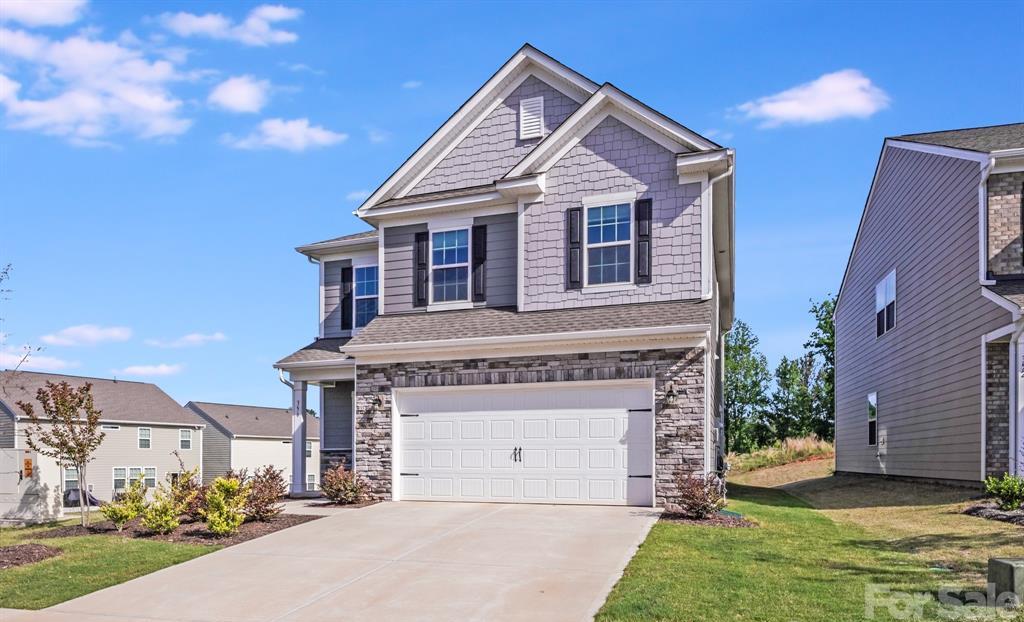
How Much House Can I Actually Afford in Kannapolis? The 2026 Income Calculator
Discover exactly how much house you can afford in Kannapolis with our comprehensive 2026 income calculator. Includes affordability tables, debt-to-income formulas, hidden costs breakdown, and real Baker's Creek examples for every budget.
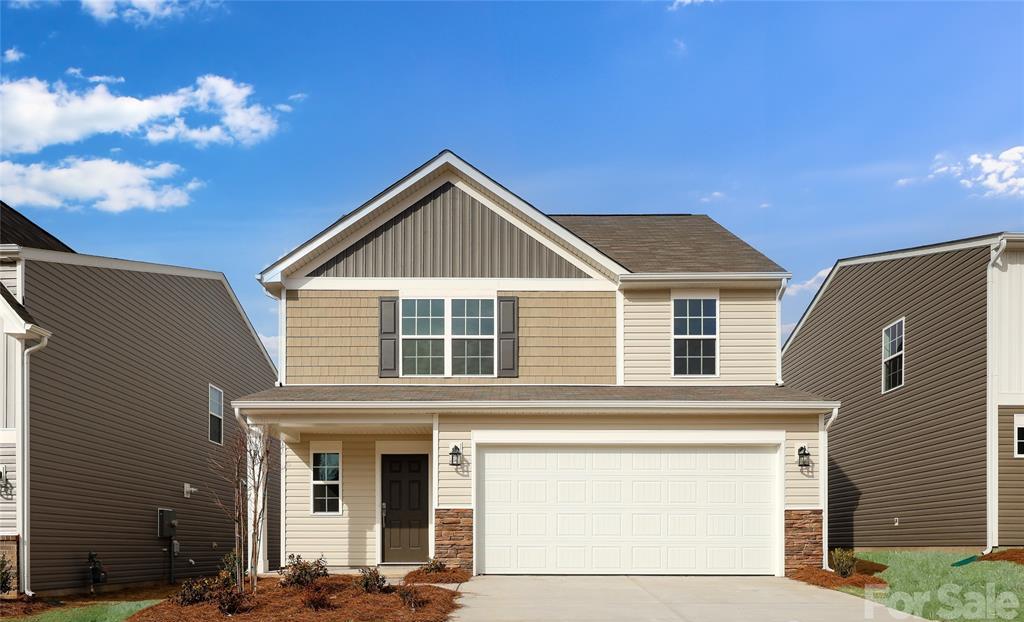
You've found your dream home at Baker's Creek, but can you actually afford it? This question keeps many prospective homebuyers awake at night, scrolling through listings and second-guessing their financial readiness. The anxiety is real—and completely normal. Homeownership represents the largest financial commitment most families will ever make, so understanding exactly what you can afford is crucial to making a confident, informed decision.
The good news? Determining your home affordability isn't as complicated as it seems. Lenders use straightforward formulas based on your income, debts, and down payment to calculate your maximum home price. Even better news for Kannapolis homebuyers: the income requirements here are significantly lower than in nearby Charlotte, making homeownership accessible to middle-income families who might be priced out of the urban market.
In this comprehensive guide, we'll walk you through the exact calculations lenders use, show you what different income levels can afford in the Kannapolis market, and help you understand the complete financial picture beyond just the mortgage payment. By the end, you'll know precisely how much house you can afford—and whether Baker's Creek fits your budget.
Understanding the 28/36 Rule: The Foundation of Home Affordability
Before diving into specific numbers, you need to understand the industry-standard formula lenders use to determine how much they'll loan you. The 28/36 rule serves as the foundation for mortgage qualification and provides a conservative, sustainable approach to homeownership.
The rule states that your housing expenses should not exceed 28% of your gross monthly income, and your total debt payments should not exceed 36% of your gross monthly income. These percentages ensure you have enough income remaining for other essential expenses like food, transportation, healthcare, and savings.
Let's break down what counts toward each percentage. Your housing expenses (the 28% portion) include your mortgage principal and interest payment, property taxes, homeowners insurance, and HOA fees if applicable. This complete package is often abbreviated as PITI+HOA. Your total debt payments (the 36% portion) include everything in your housing expenses plus car loans, student loans, credit card minimum payments, personal loans, and any other recurring debt obligations.
Here's a concrete example to illustrate how the rule works in practice. Imagine a household earning $90,000 annually, which translates to $7,500 in gross monthly income. According to the 28/36 rule, their maximum housing expense would be $7,500 × 28% = $2,100 per month. Their maximum total debt payment would be $7,500 × 36% = $2,700 per month. This means they have $600 monthly available for non-housing debts ($2,700 - $2,100 = $600).
If this household has a $400 monthly car payment and $200 in student loan payments, they're using exactly $600 of their debt allowance, leaving the full $2,100 available for housing. However, if they had $800 in non-housing debts, they would exceed the 36% threshold and would need to either pay down debt, increase their down payment to lower the mortgage payment, or look at less expensive homes.
Most conventional lenders strictly enforce these ratios, though some loan programs offer flexibility. FHA loans, for example, may allow housing expenses up to 31% and total debts up to 43% for well-qualified borrowers. However, just because you qualify for the maximum doesn't mean you should borrow that much. Many financial advisors recommend staying well below these thresholds to maintain financial flexibility for unexpected expenses, savings goals, and quality of life.
The Real Numbers: What Can You Afford in Kannapolis?
Now let's translate these formulas into real-world scenarios for the Kannapolis market. The following table shows what different household income levels can afford, using current 2026 market conditions including a 6.5% mortgage interest rate, 20% down payment, Cabarrus County property tax rate of 0.68%, estimated insurance of $135 monthly, and typical Baker's Creek HOA fees of $75 monthly.
| Annual Household Income | Monthly Gross Income | Max Housing Cost (28%) | Max Home Price | Monthly Payment Breakdown | Baker's Creek Floor Plans in Budget |
|---|---|---|---|---|---|
| $60,000 | $5,000 | $1,400 | $220,000 | $1,115 mortgage + $125 taxes + $85 insurance + $75 HOA | Entry-level townhomes (if available under $220k) |
| $70,000 | $5,833 | $1,633 | $260,000 | $1,315 mortgage + $147 taxes + $100 insurance + $75 HOA | Smaller single-family homes, select townhomes |
| $80,000 | $6,667 | $1,867 | $300,000 | $1,518 mortgage + $170 taxes + $115 insurance + $75 HOA | Dream Heritage Collection entry models |
| $90,000 | $7,500 | $2,100 | $340,000 | $1,720 mortgage + $193 taxes + $130 insurance + $75 HOA | Dream Heritage Collection, entry Dream Modern |
| $100,000 | $8,333 | $2,333 | $380,000 | $1,923 mortgage + $215 taxes + $145 insurance + $75 HOA | Most Dream Modern Collection models |
| $110,000 | $9,167 | $2,567 | $420,000 | $2,125 mortgage + $238 taxes + $160 insurance + $75 HOA | Premium Dream Modern Collection models |
| $120,000 | $10,000 | $2,800 | $460,000 | $2,328 mortgage + $261 taxes + $175 insurance + $75 HOA | Largest floor plans with upgrades |
These calculations assume you have minimal other debts. If you're carrying significant car loans, student loans, or credit card balances, your maximum home price will be lower because you need to stay within the 36% total debt threshold. For example, if you earn $90,000 annually but have $600 monthly in non-housing debts, your maximum housing expense drops from $2,100 to $1,500 (since $1,500 housing + $600 other debts = $2,100 total, which is 28% of gross income).
The sweet spot for Baker's Creek homebuyers falls in the $85,000-$110,000 household income range. This income level comfortably affords homes in the mid-$300s to low-$400s, which encompasses most of the Dream Heritage and Dream Modern collections. Families in this income bracket can purchase quality new construction with modern features, energy efficiency, and community amenities without stretching their budget to uncomfortable levels.
Compare this to Charlotte, where the median home price of $426,000 requires a household income of approximately $115,000 to meet the 28/36 rule. That's a $25,000-30,000 higher income requirement for comparable square footage—and often for older homes without the warranties and energy efficiency of new construction. For middle-income families, this difference can mean the difference between homeownership and continued renting.
Breaking Down the Affordability Formula: Calculate Your Maximum Home Price
Understanding the formula behind these numbers empowers you to calculate your own maximum home price based on your specific financial situation. Let's walk through the step-by-step process so you can determine exactly what you can afford.
Step 1: Calculate your maximum monthly housing payment. Take your gross monthly income (before taxes and deductions) and multiply by 0.28. For example, if you earn $85,000 annually, your gross monthly income is $85,000 ÷ 12 = $7,083. Your maximum housing payment is $7,083 × 0.28 = $1,983 per month.
Step 2: Subtract non-mortgage housing costs. From your maximum housing payment, subtract property taxes, insurance, and HOA fees to find how much remains for the actual mortgage payment. In Kannapolis, property taxes run approximately 0.68% annually, which translates to about $57 monthly per $100,000 of home value. Insurance averages $135-150 monthly for homes in the $300k-400k range. Baker's Creek HOA fees are approximately $75 monthly. Using our $1,983 maximum housing payment example, if you're targeting a $350,000 home, you would subtract approximately $200 for taxes + $140 for insurance + $75 for HOA = $415 in non-mortgage costs. This leaves $1,983 - $415 = $1,568 for your mortgage payment.
Step 3: Calculate your maximum loan amount. Using a mortgage calculator with current interest rates (approximately 6.5% for a 30-year fixed mortgage in 2026), determine what loan amount produces your maximum mortgage payment. A $1,568 monthly payment at 6.5% interest over 30 years supports a loan of approximately $246,000.
Step 4: Add your down payment. If you're putting 20% down (the ideal to avoid PMI), your maximum home price is your loan amount divided by 0.80. In our example, $246,000 ÷ 0.80 = $307,500 maximum home price. If you're putting down less—say 10%—your maximum home price would be $246,000 ÷ 0.90 = $273,333.
Step 5: Verify against the 36% total debt rule. Calculate your total monthly debt payments including the housing payment you just calculated plus all other recurring debts. Ensure this total doesn't exceed 36% of your gross monthly income. In our example, 36% of $7,083 is $2,550. If your $1,983 housing payment plus $400 in other debts equals $2,383, you're within the limit. However, if you have $700 in other debts, your total would be $2,683, exceeding the threshold. In that case, you'd need to either pay down debt or reduce your target home price.
This formula reveals an important truth: debt is the enemy of home affordability. Every $100 in monthly debt payments reduces your home buying power by approximately $15,000-20,000. A $400 car payment might reduce your maximum home price by $60,000-80,000. This is why financial advisors strongly recommend paying down high-interest debt and avoiding new car loans in the 12-18 months before home shopping.
For Kannapolis buyers, the lower home prices create a significant advantage. Because your base housing costs are lower than in Charlotte, you have more room in your debt-to-income ratio for other obligations. A family with $600 monthly in student loans and car payments might be completely priced out of Charlotte but can comfortably afford a quality home in Baker's Creek.
Hidden Costs First-Time Buyers Miss: The Complete Financial Picture
The mortgage payment represents only part of your homeownership costs. First-time buyers often underestimate the additional expenses required to purchase and maintain a home, leading to financial stress and buyer's remorse. Understanding these hidden costs upfront allows you to budget realistically and avoid unpleasant surprises.
Closing costs represent your first major expense beyond the down payment. These fees cover loan origination, title insurance, appraisal, home inspection, attorney fees, recording fees, and prepaid property taxes and insurance. In North Carolina, closing costs typically range from 2-5% of the purchase price. For a $350,000 home, expect $7,000-17,500 in closing costs. Some costs are negotiable, and sellers sometimes contribute toward buyer closing costs as part of the purchase agreement, but you should plan to cover these expenses yourself.
Moving expenses vary widely depending on whether you hire professional movers or rent a truck and recruit friends. Professional movers for a typical 3-bedroom home cost $1,500-3,500 for local moves. Add truck rental, packing supplies, cleaning supplies, and meals for helpers if doing it yourself. Budget at least $1,000-2,000 for moving-related expenses.
Immediate home purchases catch many first-time buyers off guard. Even in a brand-new home, you'll need items like window treatments for privacy ($500-2,000 depending on number and quality of windows), lawn equipment for yard maintenance ($300-800 for mower, trimmer, and basic tools), additional furniture to fill larger spaces than your previous rental ($2,000-5,000), and small items like mailbox, house numbers, doormat, and garage storage solutions ($200-500). Budget $3,000-8,000 for these immediate purchases.
Utility setup and deposits include connection fees for electric, gas, water, sewer, internet, and cable. Some utilities require deposits for new customers. Total setup costs typically run $200-500. Your monthly utility bills will also likely increase compared to apartment living due to larger square footage. Budget $200-300 monthly for utilities in a new construction home in Kannapolis.
Ongoing maintenance reserve is crucial even for new construction. While your home comes with warranties covering major systems and structural issues, you'll still need funds for minor repairs, HVAC filter replacements, lawn care, pest control, and eventual appliance replacements. Financial experts recommend setting aside 1-2% of your home's value annually for maintenance. For a $350,000 home, that's $3,500-7,000 annually or $290-580 monthly. New construction requires less maintenance initially, but establishing this savings habit early prevents financial stress when the water heater fails or the roof needs replacement in 10-15 years.
HOA fees and special assessments at Baker's Creek run approximately $75 monthly, covering community amenities like the pool, playground, and common area maintenance. While this is built into your housing payment calculation, be aware that HOAs can levy special assessments for major repairs or improvements. Having an emergency fund protects you from these unexpected expenses.
When you add these costs to your monthly mortgage payment, the total cost of homeownership becomes clear. For a $350,000 home in Baker's Creek, your true monthly cost looks like this: $1,770 mortgage payment + $200 property taxes + $140 insurance + $75 HOA + $250 utilities + $300 maintenance reserve = $2,735 monthly. This is why the 28/36 rule exists—to ensure you have sufficient income to cover not just the mortgage, but the complete cost of homeownership while maintaining financial stability.
The silver lining for Baker's Creek buyers: new construction dramatically reduces maintenance costs for the first 5-10 years. Your HVAC system, roof, appliances, and major systems are all brand new with warranties. You won't face the $8,000 roof replacement, $6,000 HVAC repair, or $3,000 water heater replacement that plague buyers of older homes. This advantage partially offsets the higher purchase price of new construction and provides peace of mind that your maintenance reserve can grow rather than being constantly depleted.
Income Boosting Strategies: Getting to "Yes" When You're Close
What if you're close to affording your target home but not quite there? Many buyers find themselves in this frustrating position—earning enough to be financially stable but falling $10,000-20,000 short of qualifying for their desired home. Before giving up on homeownership or settling for a less desirable property, consider these strategies to boost your buying power.
Co-borrowing with family members allows you to combine incomes for qualification purposes. If you earn $75,000 and your spouse or partner earns $40,000, your combined $115,000 income dramatically increases your buying power. Even co-borrowing with a parent or sibling who will live with you can work, though lenders scrutinize these arrangements carefully. All co-borrowers must sign the mortgage and appear on the title, making them equally responsible for the debt. This strategy works best when all parties have good credit and stable income.
Documenting side income can add thousands to your qualifying income if you have consistent freelance work, rental income, or gig economy earnings. Lenders typically require two years of documented side income to count it toward qualification, though some accept one year for well-established businesses. If you earn an extra $1,000 monthly from freelance work, that's $12,000 annually that could increase your maximum home price by $50,000-60,000. Keep meticulous records, file Schedule C with your tax returns, and maintain separate business bank accounts to strengthen your case.
Down payment assistance programs in North Carolina help qualified buyers overcome the down payment hurdle. The NC Home Advantage Mortgage program offers down payment assistance up to 5% of the purchase price for first-time buyers meeting income limits. The NC Home Advantage Tax Credit provides a federal tax credit worth up to $2,000 annually, effectively reducing your mortgage payment. USDA loans offer 100% financing (zero down payment) for homes in eligible rural areas, though Kannapolis itself doesn't qualify. Research programs through the North Carolina Housing Finance Agency and discuss options with your lender.
FHA loans with lower down payment requirements allow qualified buyers to purchase with as little as 3.5% down instead of the conventional 20%. For a $350,000 home, that's $12,250 down instead of $70,000—a massive difference that makes homeownership accessible years earlier. The trade-off is mortgage insurance premiums (MIP) that add approximately $200-300 monthly to your payment, but for buyers who can't save a 20% down payment, FHA loans provide a viable path to homeownership. You can refinance to a conventional loan once you've built 20% equity to eliminate the MIP.
Timing considerations can significantly impact affordability. Waiting 6-12 months to increase savings, pay down debt, or boost income might be the smartest financial decision. Use this time strategically: aggressively pay down high-interest credit cards and car loans to improve your debt-to-income ratio, save for a larger down payment to reduce your monthly payment and avoid PMI, work on improving your credit score to qualify for better interest rates (each 0.5% reduction in interest rate saves approximately $100 monthly on a $300,000 loan), and negotiate a raise or seek higher-paying employment to increase your qualifying income.
Choosing a less expensive home initially provides a stepping stone to your dream home. Instead of stretching to buy the largest floor plan at Baker's Creek, consider starting with a smaller model or a townhome. After 5-7 years of building equity, you can sell and upgrade to your ideal home with a larger down payment and likely higher income. This strategy allows you to start building equity immediately rather than waiting years while renting and watching home prices increase.
Seller concessions can reduce your out-of-pocket costs at closing. In a buyer-friendly market, sellers may agree to contribute 2-3% toward your closing costs, effectively reducing your cash needed at closing by $7,000-10,000 on a $350,000 home. This doesn't increase your buying power per se, but it reduces the cash you need upfront, allowing you to preserve savings for furniture, moving, and emergency funds.
The key is being strategic and patient. Homeownership is a marathon, not a sprint. Taking an extra 6-12 months to strengthen your financial position can save you tens of thousands in interest over the life of your loan and prevent the financial stress of being house-poor—owning a home but having no money for anything else.
Baker's Creek Affordability Advantage: Real Examples
Let's bring all these concepts together with concrete examples showing how Baker's Creek homes fit real-world budgets. These scenarios demonstrate the community's accessibility for middle-income families and highlight the value proposition compared to Charlotte alternatives.
Scenario 1: The Young Professional Couple - $85,000 Household Income
Meet Sarah and James, both 28 years old with a combined household income of $85,000 ($7,083 monthly gross). Sarah works as a nurse at Atrium Health Cabarrus earning $52,000, while James is a software developer working remotely for a Charlotte tech company earning $33,000. They have $15,000 saved for a down payment, a $350 monthly car payment, and $200 in student loan payments.
Using the 28/36 rule, their maximum housing payment is $7,083 × 0.28 = $1,983 monthly. Their maximum total debt is $7,083 × 0.36 = $2,550 monthly. With $550 in non-housing debts, they have $2,000 available for housing ($2,550 - $550 = $2,000), which is slightly below their 28% threshold but still comfortable.
With a $2,000 monthly housing budget and their $15,000 down payment (approximately 5%), they can afford a home priced around $280,000-300,000 using an FHA loan. This budget comfortably fits several Baker's Creek floor plans in the Dream Heritage Collection, including 3-bedroom, 2-bathroom homes with approximately 1,500-1,700 square feet.
Their monthly payment breaks down as follows: $1,625 mortgage payment (including FHA mortgage insurance), $170 property taxes, $125 insurance, $75 HOA = $1,995 total. This leaves them with $5,088 monthly after housing and other debts for living expenses, savings, and quality of life—a comfortable margin that allows for vacations, dining out, and building emergency savings.
In Charlotte, this same couple would be limited to townhomes or condos in outer suburbs, likely in older buildings without the warranties and energy efficiency of new construction. Their commute times would be similar or longer, but they'd have significantly less space and no yard. Baker's Creek provides superior value for their budget.
Scenario 2: The Growing Family - $105,000 Household Income
Meet Marcus and Lisa, both 35 years old with two young children (ages 3 and 5). Marcus works as a project manager for a manufacturing company in Concord earning $68,000, while Lisa is a teacher at a Kannapolis elementary school earning $37,000. They have $40,000 saved for a down payment, no car payments (vehicles paid off), and $300 monthly in student loan payments.
Using the 28/36 rule, their maximum housing payment is $8,750 × 0.28 = $2,450 monthly. Their maximum total debt is $8,750 × 0.36 = $3,150 monthly. With only $300 in non-housing debts, they have the full $2,450 available for housing with plenty of room in their debt-to-income ratio.
With a $2,450 monthly housing budget and their $40,000 down payment (approximately 11%), they can afford a home priced around $380,000-400,000. This budget opens up the Dream Modern Collection, including 4-bedroom, 2.5-bathroom two-story homes with approximately 2,000-2,200 square feet—perfect for their growing family.
Their monthly payment breaks down as follows: $2,050 mortgage payment, $215 property taxes, $145 insurance, $75 HOA = $2,485 total. While this slightly exceeds their 28% threshold, their low non-housing debts keep them well within the 36% total debt limit, and lenders would likely approve this scenario. This leaves them with $6,265 monthly after housing and other debts—sufficient for childcare costs, family activities, and savings.
In Charlotte, this family would struggle to find a 4-bedroom home under $450,000, which would require approximately $120,000 household income to qualify comfortably. Baker's Creek allows them to achieve their space needs while maintaining financial flexibility for their children's activities, education savings, and family vacations.
Scenario 3: The Empty Nesters - $95,000 Household Income
Meet Robert and Patricia, both 58 years old with adult children who have moved out. Robert works as an operations manager earning $60,000, while Patricia is a medical office administrator earning $35,000. They're selling their current home in Charlotte and will have $80,000 for a down payment after closing costs. They have no debts other than a small $150 monthly car payment.
Using the 28/36 rule, their maximum housing payment is $7,917 × 0.28 = $2,217 monthly. With minimal other debts, they have nearly their full housing allowance available. With an $80,000 down payment (approximately 22%), they can afford a home priced around $360,000-380,000 while staying well within their budget.
They're interested in downsizing to a single-story ranch home for aging-in-place purposes. Baker's Creek offers several single-story floor plans in the Dream Heritage Collection with 3 bedrooms, 2 bathrooms, and approximately 1,600-1,800 square feet—perfect for their needs with a guest room for visiting grandchildren.
Their monthly payment breaks down as follows: $1,750 mortgage payment, $205 property taxes, $140 insurance, $75 HOA = $2,170 total. This leaves them with $5,747 monthly after housing and other debts—providing ample funds for retirement savings, travel, and hobbies as they approach retirement age.
The Baker's Creek advantage for this couple is the combination of new construction (no maintenance worries as they age), single-story living (no stairs to navigate), and community amenities (pool and social activities for an active retirement lifestyle). They're paying less than they would for a comparable home in Charlotte while gaining the benefits of new construction and a master-planned community.
Your Next Steps: From Affordability to Homeownership
Now that you understand exactly how much house you can afford in Kannapolis, it's time to take action. Homeownership at Baker's Creek is within reach for families earning $85,000+ annually—significantly more accessible than Charlotte while providing superior value, modern features, and a welcoming community.
Start by running your own numbers using the formulas provided in this guide. Calculate your maximum housing payment based on your gross monthly income, subtract your non-housing debts to ensure you're within the 36% threshold, and determine your maximum home price based on your down payment amount. Be honest about your complete financial picture, including the hidden costs of homeownership we discussed.
If you're not quite ready financially, create a 6-12 month action plan. Focus on paying down high-interest debt, building your down payment savings, and improving your credit score. Every month of preparation strengthens your financial position and could save you thousands in interest over the life of your loan.
When you're ready to move forward, schedule a consultation with the Baker's Creek team to discuss your specific situation. Our experienced agents understand the local market, work with preferred lenders who specialize in the Kannapolis area, and can help you explore all available financing options including down payment assistance programs and first-time buyer incentives.
Visit Baker's Creek to tour our model homes and see firsthand the quality, features, and value that make our community the smart choice for Kannapolis homebuyers. Walk through different floor plans to understand which layout best fits your family's needs and budget. Experience the community amenities and envision your family enjoying the pool, playground, and welcoming neighborhood atmosphere.
The dream of homeownership doesn't have to remain a dream. With the right knowledge, preparation, and guidance, you can confidently take the next step toward owning a beautiful new home at Baker's Creek. Your future starts here.
Ready to Take the Next Step?
Schedule your free, no-obligation consultation with a Baker's Creek homeownership specialist today. We'll review your specific financial situation, calculate your exact buying power, and show you which floor plans fit your budget. Our team has helped hundreds of families navigate the path to homeownership in Kannapolis—let us help you too.
During your consultation, we'll:
- Review your income and debt to calculate your maximum home price
- Discuss down payment options and assistance programs you qualify for
- Tour model homes in your price range
- Answer all your questions about the homebuying process
- Connect you with preferred lenders who specialize in the Kannapolis market
No pressure, no obligation—just honest guidance from local experts who want to see you succeed.
Or call us directly: 704-746-3566 [blocked]
Prefer to explore on your own first? View our available floor plans [blocked] or take a virtual tour [blocked] of Baker's Creek amenities.
Download Your Free Affordability Calculator Worksheet
Get our comprehensive PDF worksheet with affordability tables, debt-to-income calculators, and hidden costs checklist. Perfect for planning your home purchase budget.
TAGS
About the Author
Sir Ashley Harrison is a Real Estate Financial Advisor at Baker's Creek, specializing in new home sales in Kannapolis, NC. With deep local knowledge and commitment to client success, Sir helps families find their perfect home in the Charlotte metro area.
Contact Sir